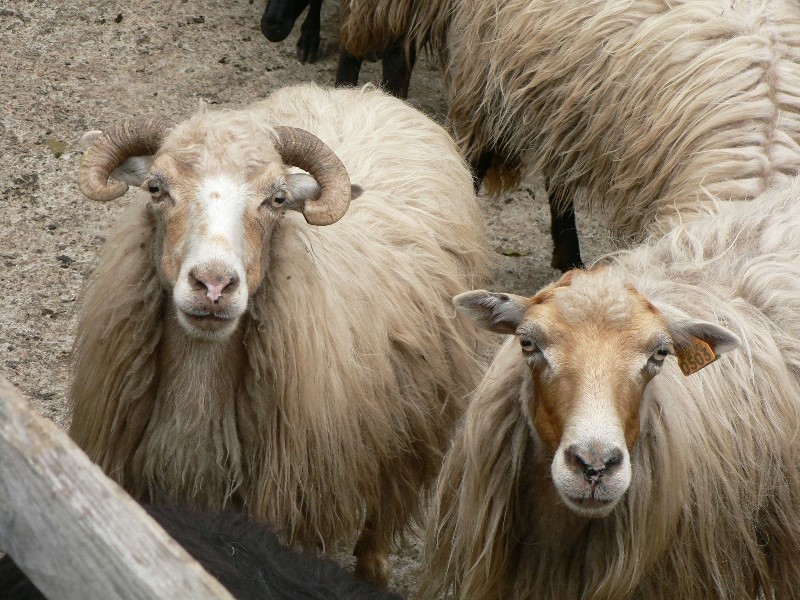
Sheep : The ewe is the female of the mouton, of which we consume the milk, most often in the form of cheese, et, à la fin de la période de reproduction, entre 4 et 6 ans, la meat. Celle-ci, souvent plus grasse que celle de l’agneau ou du mouton, rouge et ferme, de goût assez prononcé, demande une cuisson particulière. L’essentiel des morceaux est vendu en butchery under name de « mouton ». Une agnelle antenaise est une jeune brebis de dix à dix-huit mois.
A vacive is a two-year-old ewe that has not yet borne. A pinecone is an old sheep.
Le milk de brebis contient davantage de matières grasses (64 %), de protéines (56 %) et de matières minérales (8,5 %) que le lait de vache, mais la proportion de lactose est légèrement plus faible (42 %), ce qui peut le rendre plus digeste.
Cheeses are made from it, traditionally made in plateau and mountain regions: in Roquefort (Roquefort), in Corsica with the brocciu and niolo, in Béarn with oloron and laruns, and in the Basque Country with esbareich, arnéguy and ossau-iraty. In several countries, there are many cheeses made from sheep's milk such as manchego and serra in Spain, rabaçal and serpa in Portugal, pecorino in Italy; feta in Greece or the various kaschkaval in the Balkans. Fresh sheep's cheese is eaten with sucre or crème fraîche ; it is used to make pies or to poke des slippers.
In Scotland, the flat national is the haggis, made of a paunch sheep stuffed with the crack of'welfare (heart, liver, mou) chopped with onions, groats byoat and fat de mouton.