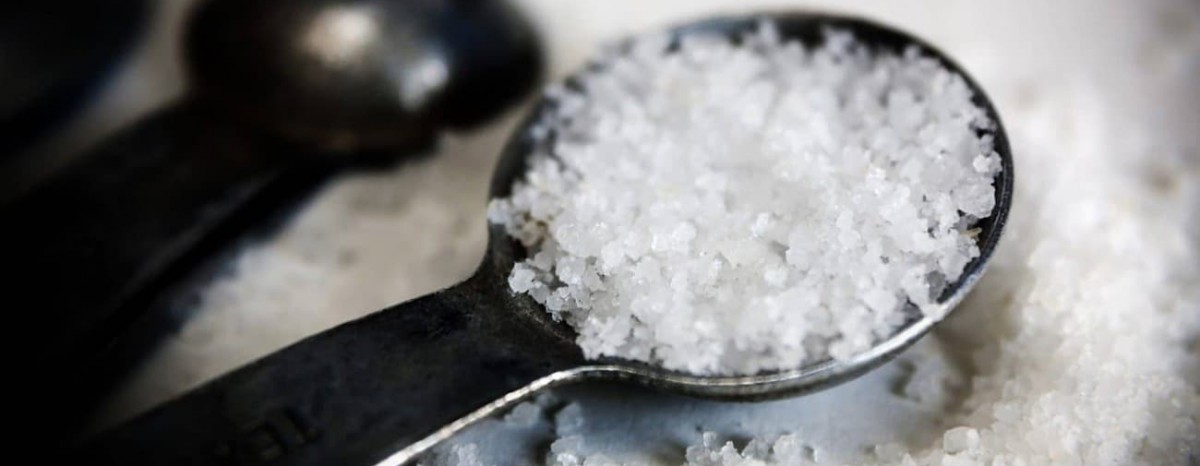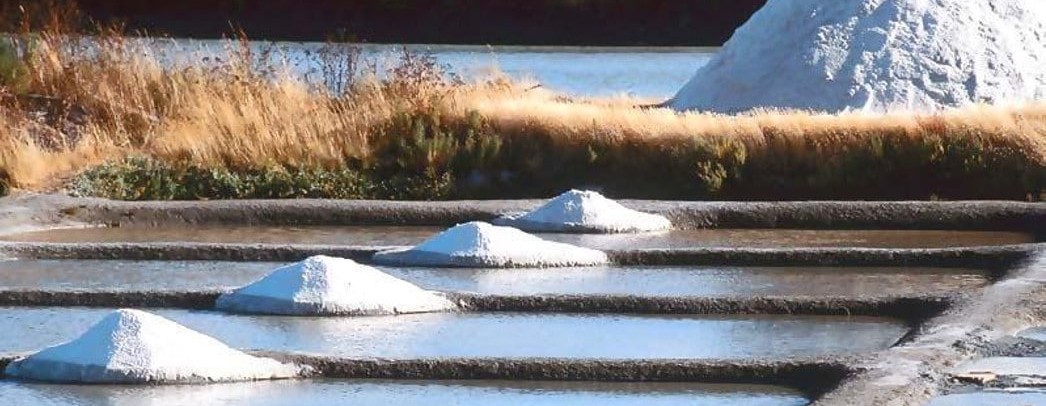

Food salt : Food salt or table salt or cooking salt, is essentially composed of crystals of sodium chloride in its pure state which is very abundant in nature.
It comes in different forms: coarse salt (or coarse salt), fine salt, fleur de sel, salt chips or crystals, block or salt bread.
Salt is a crystallized, crumbly, odorless substance with a pungent taste, used as a condiment and preservative.
We have always distinguished the sea salt, extracted from sea water by evaporation (30 kg per cubic meter), and the Rock salt, existing in the state of crystals in the earth.
Absolutely essential to the body, salt helps maintain the osmotic pressure of cells; the needs of the human body are approximately 5 g of salt per day, but the diet, very rich in Western countries, largely covers them, sometimes in excess (up to 20 g), which can lead to problems. serious.
An essential food condiment, edible salt today remains an essential raw material for the food industries (canned preserves, cured meats, salted fish, cold meats, cheese).
Food salt comes in three forms:
– Coarse salt (or kitchen salt): It is refined (that is to say freed, by dissolution in water, then evaporation, of its earthy materials and deliquescent salts – potash salt and magnesia salt) or not , it is used in industry and for certain preparations (coarse-salted beef, vegetables to be disgorged, cooking poultry with coarse salt in a casserole dish. In small crystals, it is used to salt dishes during cooking; it must keep it on hand in a lidded box, which protects it from humidity. Various products are added to it (magnesium carbonate, sodium silico-aluminate, etc.), the proportion of which must never exceed 2%. When it comes to “sea salt”, the origin is always indicated on the packaging.
– Unrefined salt, gray in color, is richer; it is therefore particularly suitable for cooking, as well as for cooking fish (with large scales), poultry, vegetables, etc. in a salt crust. The food, enclosed in a custom-made shell, cooks in its own juice and thus retains all its flavor.
(There Fleur de sel or salt from salt marshes and Rock salt fall into the category of unrefined salts).
- The fine salt (or table salt): It is essentially composed of sodium chloride.
These food salts are generally called Dry salts.
History of salt : Salt has been known since prehistoric times for its seasoning and food preservation properties.
Remains of salt mining have been found in one of the oldest prehistoric cities in Europe Solnitsata, which is located near Provadia in northeastern Bulgaria. The town was surrounded by walls which were to protect the local production of salt, apparently abundant in this region. Its period of saline activity dates from 4700 to 4200 BC.
Salt was extracted from mines generally very buried in the ground (mines of evaporitic rock such as halite), or more easily from salty sources or the sea (saliculture) shards of briquettes, useful ceramics in the extraction of salt ( pots where the brine was boiled over wood-fired ovens and sticks of cooked clay whose assembly allowed part of the evaporation of this brine) are frequently found until the Iron Age, period which saw the appearance of more robust and larger capacity tools in which the filtered and concentrated brine was lightly heated (ethnoarchaeology shows that salty and dried earth crusts are leached into a filtering funnel or a basket by sea water then by brine, so that the salt juice reaches saturation) to preserve the fuel, obtaining large quantities of salt by boiling brine consuming too much wood.
It was also probably used early in religious ceremonies and rites. We know of such uses among the Hebrews, Greeks and Romans of Antiquity.
This natural element has had great strategic and economic importance and has been the subject of significant trade, sometimes over great distances.
In the Middle Ages, the “salt routes” established solid commercial traffic, both in France, particularly from Saintonge, and in Scandinavia, where dried and salted fish constituted the basis of the diet. The corporation of salt measurers already existed in the middle century. Since salt is essential for the constitution of long-term reserves, and its places of production can be easily monitored, many governments have obtained taxes from it for safe collection.
The salt routes have been the major routes of communication and exchange since Antiquity for the transport of salt, transported from producing regions to regions which were deprived of it.
Control of the salt supply was one of the keys to the military expansion of the Roman Empire, which granted itself a monopoly. Caesar's conquest armies took with them salted meats which ensured part of their supply. Without this salting, the armies could only have resorted to pillaging the conquered territories. This strategy limited resistance and ensured a lasting establishment of Roman civilization.
In France, the salt tax, created in the 1790th century and abolished in XNUMX, required individuals to purchase each year from the “king's granaries”, at a fixed price and even if they did not consume it, a certain quantity of salt.
The role of salt as a key to military supplies continued until the invention, at the end of the 18th century, of new food preservation techniques. It therefore played a crucial role in the great maritime conquests, authorizing the transport of provisions for voyages of exploration with random stopovers.
It was also a means of exchange for a currency or a tax, including in China and Europe as evidenced by the common etymology of the words "salt" and "salary" (in Latin salarium, sum given to soldiers for the purchase salt). Salt under the name “salignon” was a currency in Tibet and Ethiopia. In France, salt was stored in salt granaries and then in “Salt Depots” defined by the Encyclopedia or Dictionary of Sciences, Arts and Crafts as “chambers where salt is deposited, in the countries where it is stored. is a merchant. The Chamber of Deposits is also a jurisdiction established to hear disputes that may arise in relation to the sale & distribution of salt. The first judge of this chamber is called the president of the deposits.”
In France, salt was exploited in salt marshes on the Mediterranean and Atlantic coasts, perhaps from prehistory, and using salt ovens in Gallic and then Gallo-Roman salt works on the shores of northern Gaul. (this could be one of the origins of the name of the Salians) from where it was transported in the form of salt loaves to Rome by Roman roads, as well as a Menapian ham (named after a Belgian people) salted or smoked, very famous among the Romans. Because of its virtues in preserving meat, fish, butter and cheese, salt becomes an essential ingredient for families. The Catholic religion imposes lean days (without meat), dried fish preserved in salt is in great demand. The salt shaker is common to both poor and rich families. Among the latter, the salt shaker is decorated and constitutes a luxury object. The most striking example is undoubtedly the salt shaker by the Italian goldsmith Benvenuto Cellini, which King Francis I commissioned. In the 10th century, the importance of salt was such that a peasant family's expenditure on this product was around XNUMX% of its income.
Salt was taxed for several centuries via a specific tax called gabelle which appeared under Louis IX. This tax, which became permanent, variable according to the provinces and increasing to the point of making the price of salt high, became so unpopular that it led to massive rural exoduses, triggered wars and participated in the outbreak of the French Revolution. A salt route with Italy is still in the geography of Provence. Salt smugglers were called “false sau(l)niers” and the agents responsible for tracking them down, “gabelous”. Disputes linked to salt and “salt granaries” could fall under “royal cases”: legal causes falling under royal sovereignty alone and therefore “reserved” for the knowledge of royal judges alone, privately to all other judges” (lords or ecclesiastics, and sometimes provosts who were “inferior royal judges”).
In 1930, the Salt March initiated by Gandhi, to protest against the British monopoly on salt, was an important step in the march towards Indian independence.
Sometimes, the toponymy recalls the presence of salt in the ground as in Lons-le-Saunier or Salins-les-Bains.
Unrefined salt: Natural salt is unrefined and still contains all of its natural minerals. Natural salts therefore have different taste properties and appearance depending on the quantity of minerals they contain. Thus, hand-harvested fleur de sel or sea salt has a unique flavor that changes from one region to another.
Unrefined sea salt is healthier because it is richer in magnesium (in the form of magnesium chloride) as well as trace elements and iron.
However, natural salts may not contain enough iodine to prevent diseases due to iodine deficiency such as goiter.
Refined salt: Refining makes it possible to obtain a salt of the white color until now frequently preferred by the consumer. It is then composed of practically 99,9% pure NaCl, to the detriment of its food qualities. Refined salt remains the most used in food. Around 7% of refined salt is also used as an additive, but the majority is intended for industrial uses (paper manufacturing, color adjustment of textiles and fabrics, production of soaps and detergents). Salt has a high market value.
Today, most refined salt is prepared from rock salt extracted from salt mines. After the raw salt has been brought back from the mines, it is refined to purify it and to facilitate its storage. The purification usually includes a recrystallization phase. During this phase, a brine solution is treated with chemicals that precipitate impurities (largely magnesium and calcium salts). Multiple evaporation steps then bring together the pure sodium chloride crystals, which are dried in the oven or in an autoclave.
Various adjuvants, addition of iodine and fluoridation: Adjuvants, anti-caking agents and fluorinated or iodized compounds are usually added to the refined salt.
Anti-caking agents and potassium iodide are usually added during the drying phase. These agents are hygroscopic chemicals that absorb moisture preventing clogging of salt crystals. The anti-caking agents used are phosphate, calcium or magnesium carbonates, fatty acid salts (acid salts), magnesium oxide, silicon dioxide, sodium aluminosilicate and tricalcium aluminum silicate. -calcium. Concerns have been raised about the possible toxic effects of aluminum in the latter two compounds, however the European Union and United States permit their use in limited quantities. The refined salt is then ready for packaging and distribution.
In addition, for several years manufacturers in the sector have been enriching or supplementing their salt with iodine and fluorine. Iodine is used to combat goiters and reduce cretinism, fluoride helps protect against cavities by strengthening enamel. However, excess iodine and fluoride also lead to serious illnesses.
Iodized table salt has helped reduce iodine deficiencies in the countries where it is used. Iodine is important for preventing insufficient production of thyroid hormones (hypothyroidism), which can cause goiter, cretinism in children, and myxedema in adults.
Table salt (or fine salt) is a refined salt containing 95% or more almost pure sodium chloride, often iodized and fluorinated. It usually contains substances that prevent the crystals from clogging (anti-caking agents) such as sodium silico-aluminate (the common name is Tixolex) and a trace amount of invert sugar to prevent the salt from turning a yellow color. once exposed to sunlight, and to prevent loss of iodine through vaporization. It is usual to put a few grains of raw rice in salt shakers to absorb moisture when anti-caking agents are not effective enough. Table salt (or fine salt) is mainly used in cooking and at the table as a condiment, often combined with pepper (often white but also black). Table salt is now used all over the world.
Legal definitions of food salts :
Food grade salt is a crystalline product consisting mainly of sodium chloride, from salt marshes, rock salt or brines from the dissolution of rock salt and meeting the following specifications:
– sodium chloride: not less than 97% of the dry extract, not including additives;
– copper: not more than 2 mg/kg;
– lead: not more than 2 mg/kg;
– arsenic: not more than 0,5 mg/kg;
– cadmium: not more than 0,5 mg/kg;
– mercury: not more than 0,1 mg/kg.
In France, the sales name for food grade salt is “food salt”, “table salt” or “cooking salt”. For that coming from salt marshes, the name becomes “gray edible sea salt”, “gray table sea salt” or “gray kitchen sea salt”.
In Quebec, Quebec table salts are composed differently. The ingredients are sodium chloride, sodium thiosulfate, potassium iodide and sodium ferrocyanide. Sometimes the term sodium chloride is replaced with the word salt.
Salt production techniques : The manufacture and use of salt is one of the oldest chemical industries. Several sources of production are possible.
– Rock salt is an ore deposit containing a large concentration of edible salt. These salt deposits were formed by the ancient evaporation of lakes or inland seas. This type of deposit is called evaporite. Each deposit has a particular composition. You can find almost pure halite there, but also sylvite or gypsum. These deposits can be extracted traditionally in a mine or by water injection. The injected water dissolves the salt, and the brine solution can be pumped to the surface where the salt is harvested. Fossil salt or rock salt is extracted from salt mines (or salt mines), such as in Bex (canton of Vaud) in Switzerland, Varangéville (Lorraine) in France, or Wieliczka in Poland.
sea salt : Salt is also obtained by evaporation of seawater, usually in shallow pools heated by sunlight; salt thus obtained was formerly called compartment salt, and is now often called sea salt. Climatic changes may affect some sea salt producers if there is increased cloudiness and rainfall in some areas. regions. As an example of the influence of meteorology, the summer of 2007 having been very rainy, the salt works of the Ile de Ré were only able to harvest 50 tonnes of salt, or 2% of the average production. For example, the year 2011 saw the harvest of Guérande salt start a month in advance thanks to more than favorable weather conditions. Salt, of marine origin, can be extracted directly from the sea, via brine, that is to say from evaporated marine water loaded with salt or from fossil deposits (gem salt).
Sea salt is harvested (or “picked”) in salt marshes (or salines), such as in Guérande, Aigues Mortes or Salin-de-Giraud or even on the island of Oléron. It is also harvested in “salt cellars” on Île de Ré.
The evaporation of water from the brine can be natural or caused by humans heating the salt water, as in Salins-les-Bains, in the Jura. It is an activity that the Gauls already practiced on several sites in north-west France, 400 years before Julius Caesar, and which in this case probably contributed to the deforestation of these regions. This salt is called “ignigenic salt”, that is to say “born of fire”.
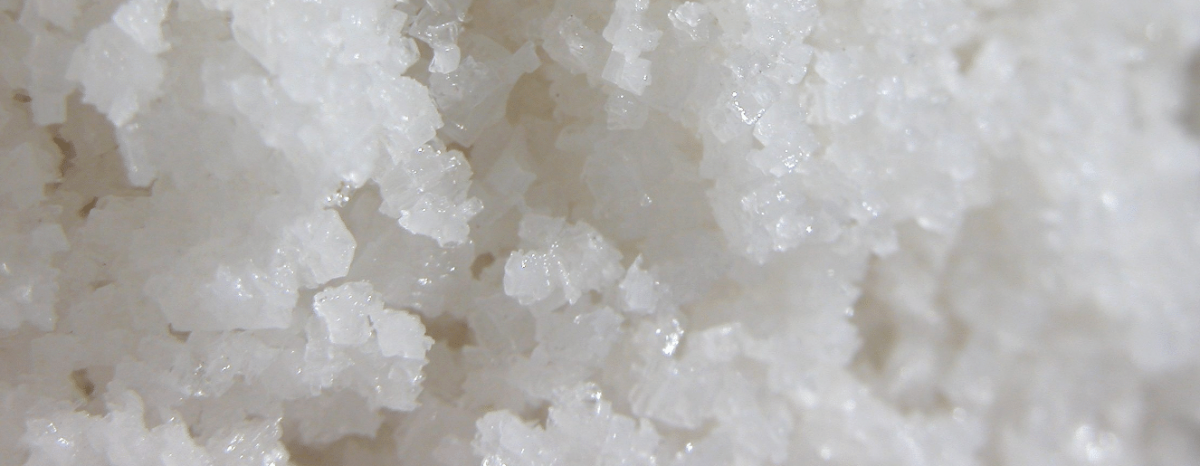
The fleur de sel : It is the thin layer of white crystals which forms and surfaces on the surface of traditional salt marshes, generally by the evaporative action of the wind. This agricultural product is used in cooking instead of salt to season dishes.
La fleur de sel se forme principalement pendant les après-midis d’été lorsque l’écart de température, provoqué par la brise, entre l’air tiède et la surface du marais salant est suffisant. Elle est rabattue par le vent sur les bords du bassin. Les cristaux de fleur de sel piégés en plaque à la surface des bassins sont beaucoup plus fins que ceux du gros sel.
Fleur de sel is collected manually and daily, in the evening, from the surface of the pools during the summer period (from the beginning of June to the end of August in the northern hemisphere).
The salt farmer carefully picks the fleur de sel using a ladle from the surface of the crystallizer, otherwise it may sink and turn into coarse salt. The salt farmer has different names depending on the region: salt worker (Guérande), salt maker (Île de Ré, Noirmoutier, Madame) and the Mediterranean (Camargue).
The tool, the lousse in Western dialect, can be made of different materials: a scraper made of chestnut wood, resin or aluminum.
The fleur de sel is then drained and dried in the sun. The fleur de sel is then of exceptional purity.
The salt crystals remaining on the surface of the water are much finer than those of coarse salt.
Fleur de sel dissolves very quickly, which allows it to penetrate well into the foods it seasons. For this reason, in cooking, it is recommended to add it at the end of cooking.
Rich in magnesium as well as trace elements, its taste is much finer and more delicate than that of table salt.
Its color sometimes pink or Salmon is due to the proliferation of Dunaliella saline, a microscopic red algae which accumulates carotenoids including beta-carotene associated with a violet odor.
Finally, we find flavored fleur de sel: with grilled spices, Espelette pepper, lemon zest, etc.
Effect of salt on taste buds: Sodium chloride can modify primary flavors; it reduces bitter and sweetness, balances acidity and contributes to the intensity of umami (one of the five basic flavors), according to mechanisms that are still poorly understood.
According to industrial producers, “Sodium chloride increases the palatability of foods, that is to say, it intensifies the perception of flavors. Na+ ions stimulate the taste buds while Cl- ions give the salty taste. Salt therefore enhances the perception of the flavor of certain foods with an initially bland profile and thus has an impact on the overall flavor profile of the finished product, generally making it more pleasant. Non-volatile chemical compounds are dissolved by saliva and detected by several parts of the tongue, palate or throat.
See also “Salt” under Dictionary of organoleptic terms.
Salt and human health : In France and in many industrialized countries, salt consumption is too high. This overconsumption, also due to the salt found in industrial preparations, leads to serious health problems, such as hypertension or obesity which are the cause of tens of thousands of premature deaths each year. There are other salts (such as potassium chloride, present in unrefined table salt but more toxic for people with heart disease, kidney disease or blood pressure problems) but are not widespread and more expensive.
Table salt can be “iodized” by adding an iodine salt, this element being necessary for the thyroid gland for the secretion of thyroid hormone and also serving for intellectual development. The sale of iodized salt is required by regulations in several countries. The chloride and sodium ions contained in salt are also very important for the functioning of the body. Indeed, these ions play a role in the conduction of nerve impulses, in muscle contraction and in water retention in the body.
World salt production: Salt is one of the few products that the world is least likely to lack over the coming millennia: reserves of rock salt are considerable and sea salt is practically inexhaustible.
Global salt production is 288 million metric tons in 2014. It meets two needs: the growth of the world population and the rapid expansion of the chemical industry in China. This country, with 60 Mt in 2007 (23,3 percent of world production), has become the leading world producer ahead of the United States (100 Mt), Germany (46 Mt), India (20 .15,8 Mt), Australia (12 Mt), Canada (12 Mt), Mexico (8,4 Mt) and Brazil (7 Mt). Europe represents 27%. 100 of world production, or 70 Mt. Despite an increase in annual production of 12,3 p. 100 since 2004, Asia still calls on Australia massively. Since 2000, the latter country has experienced annual growth in its production of more than 5 percent. 100.
In France, salt production, which reached 6.6 Mt in 2014, is characterized by relative stability with regard to obtaining ignigenic salt (a little less than 1,5 Mt coming from the salt works of Lorraine, Franche- County and South-West) and rock salt (0,5 Mt extracted from mines in Lorraine and Alsace), an irregularity in sea salt harvests – although concentrated on the sunny shores of Languedoc and Provence –, a decrease rapid growth in the production of crystallized salt since 2007 (from 3,3 Mt in 2006 to less than 1,9 Mt in 2008) as well as brine (from 5,7 Mt in 2008 to 4 Mt in 2012) intended for chemical industry, which marks the extent of deindustrialization.
The main world producers (*) of edible salt are, in 2015 (in millions of metric tons):
– no. 1: K+S and Morton Salt: 29,8 (United States)
– no. 2: China National Salt: 18,7 (China)
– no. 3: Compass Minerals: 14,4 (United States)
– no. 4: Cargill: 14 (United States)
– no. 5: Dampier Salt: 9 (Australia)
– no. 6: Artyomsol: 7,5 (Ukraine)
(*) Most of these are multinational companies that operate salt mines or salt marshes all over the world.
On a smaller scale, the natural salt harvested by salt workers in the Les Salines de Guérande cooperative amounts to an average of 10 t/year; the production of Salins du Midi (Camargue) is 000 t/year including 300t to 000t of fleur de sel (exclusively collected by hand).
Some salts are intended for specific uses :
- The celery salt : fine salt mixed with dried and pulverized celery root, used to condiment tomato juice in cocktails and other vegetable juices, but also to spice up cooking and broths.
- The lovage salt : fine salt flavored with the root of this aromatic plant, dried and pulverized, stronger than celery salt, used in soups and sauces, particularly in Germany.
- The spicy salt : mixture made from 2 kg of fine salt, 200 g of ground white pepper and 200 g of mixed spices, used to season stuffings, pâtés and terrines.
- The tenderizer salt, ordinary salt with 2 or 3% papain (enzyme extracted from papaya, promoting protein degradation), intended to tenderize meats, is reserved for domestic use.
- The iodized table salt : fine salt with added sodium iodide. Its use, recommended, among others, by theUNICEF, can compensate for iodine deficiencies (which lead to dysfunction of the thyroid gland).
- The diet salt : substitute partially or totally free of sodium chloride.
- The nitrite salt is a preservative used in charcuterie and canning; nitrite salt is a salt to which a mixture of sodium or potassium nitrate and sodium nitrite (10% maximum) has been added.
- The hickory salt (tree related to the walnut), American condiment, is a mixture of sea salt and smoked, pulverized hickory sawdust; having a slight nutty taste, it is used in barbecue cooking.
- The chinese salt : We call " chinese salt » sodium glutamate and “ fish salt », employed to make the nuoc-mam.
Related Articles:
Sea salt
Sea salt
Maldon salt
Salt of Guerande
Fine salt
Coarse salt
Dry salt
Nitrite salt

Other salts from various sources :
- Maldon salt : Maldon is a very old town in the county of Essex in the east of England. It is located at the head of the Blackwater Estuary, at the lowest point crossing the Blackwater and Chelmer rivers. Blackwater derives its name from the word “ brackwater » meaning 'brackish water' (mixture of fresh water and salt water from estuaries). Maldon sea salt has a flaky appearance. It is made by heating sea water in large vats to evaporate it to the point of salt precipitation. It is this treatment which gives it an interesting flake structure and a fairly light consistency. Unlike Guérande fleur de sel, it is very white because heating allows the foam to rise to the surface. It is therefore very iodized.
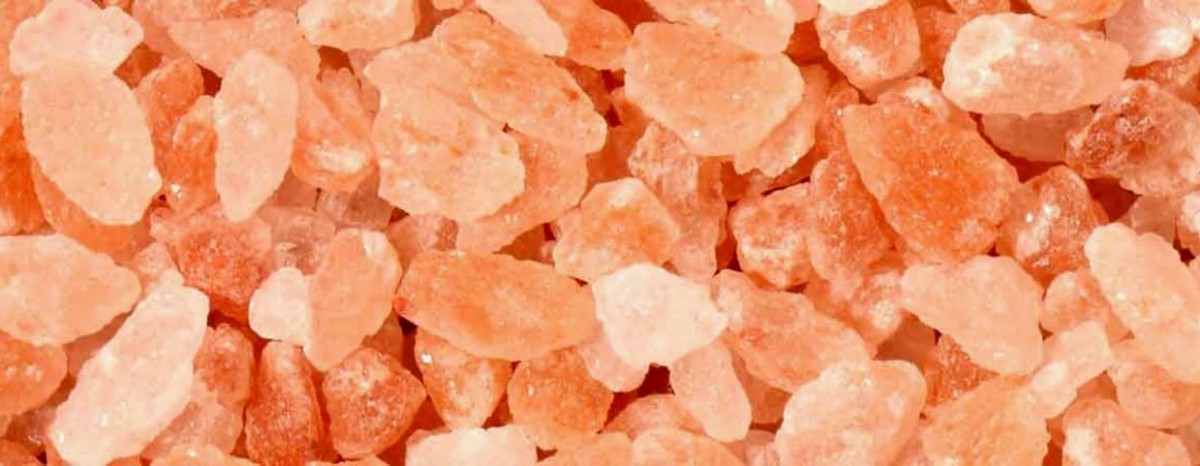
- Himalayan pink salt : These are crystals of fossil sea salt, formed more than 200 million years ago, and untouched by any pollution. They are delicately extracted by hand from the heart of the Himalayan mountains, in the mines of Khewra, region of Pakistani Kashmir. The natural pale pink color of its fine crystals is due to its iron content. Alexander the Great was the first, around 350 BC, to transport this precious salt to Europe. In ancient times, it was reserved for deities and emperors.
- Sthe gomasio of Japan: gomasio is a traditional condiment from Japan (“ rubber »Means sesame in Japanese) to sprinkle on salads, cereal dishes, vegetables, pasta, rice or to add to sauces, vinaigrettes, soups, etc.
Excellent on a beef carpaccio with olive oil…, it is a mixture of whole roasted sesame and sea salt, hence its other name “sesame salt”. Each grain of salt is impregnated with sesame oil, an oil very rich in nutritional elements.
- Halen Môn smoked salt from Wales : This salt is harvested in the cool waters of the Atlantic Ocean which surround the island of Anglesey. The crunchy texture of Halen Môn is suitable for all dishes and particularly for raw vegetables or salads.
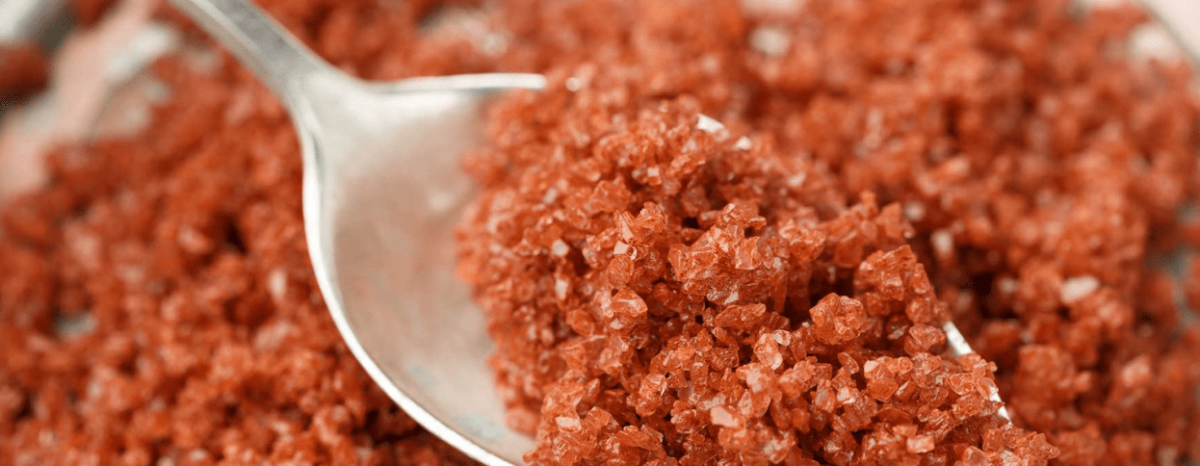
- Hawaiian Red Alaea Salt : It contains purified Alae clay which enriches it with minerals, and gives it a slight specific taste. In the Hawaiian tradition, salt is dried in the sun then mixed with a little red clay, alaea.
- Kashmir Salt Pakistan : in the heart of the Himalayan mountains, these salt diamonds are cut in the mines of Khewra, region of Pakistani Kashmir. These salt diamonds come from underground deposits which were formed over millennia by the drying up of lakes and inland seas. 100% natural rock crystal, these diamonds are very rich in trace elements and their very pure crystalline structure makes them excellent for health.
- Madagascar salt : Ifaty salt from Madagascar is the nectar of the salt marshes. It forms on the surface of clay basins during the evaporation of water under the combined action of the sun and wind. Its purity is exceptional. Fleur de sel is not collected, it is picked.
Madagascar fleur de sel comes from the salt marshes of Ifaty. 100% natural, it is guaranteed without additives.
Its whiteness, purity and taste are the result of artisanal work.
- Maras Salt from the Andes in Peru : pink, with an intense flavor, part of which was trapped underground, and which still supplies a spring in the Andes. This is where salt has been harvested by hand for over 2000 years by local families.
- Mirror salt from Bolivia : This particular salt comes from the Bolivian “sea of salt” in Uyuni. This expanse of salt, a remnant of a dried-up seawater lake, is located at an altitude of 3700 meters.
Its concentration of mineral elements makes this surface a true mirror that reflects the light of the Bolivian sky.
- Marnoto salt from Portugal : fleur de sel from the Atlantic Ocean, this 100% untreated salt is harvested by hand daily in a natural reserve in Portugal, it is without residue of pollution or other form of contamination. Naturally moist, without chemical additions or anti-caking additives.
- Murray River Salt from Australia : these salt flakes are obtained by introducing saline water from the Murray Basin in Australia into crystallization ponds, to then evaporate naturally. The crystals obtained have a pretty apricot color.
- Hawaii Black Palm Island Salt : it is obtained by artisans in Hawaii.
To enrich it with mineral elements, black lava rocks are added to the seawater in the pools, which gives this deep black color.
- Viking smoked salt from Norway : It seems that Viking smoked sea salt is one of the only culinary legacies of these valiant warriors.
But its original recipe fell into oblivion and it was to everyone's happiness that it was recently rediscovered. This salt, whose smell has a delicious flavor, is today present on many tables in Northern Europe. In Norway, it is used in many traditional dishes.
– Merlot or Cabernet salt: Wine flavored salt. It is a mixture of salt from Ile de Ré, spices and a mixture of Merlot or Cabernet grape varieties. The assembly is carried out in Saint-Emilion (Gironde) at Château Belair.
La Merlot flower is characterized by tender, fatty and creamy flavors, with sweet aromatics, to be combined with raw duck livers, beef ribs with marrow, breasts. The cabernet flower is characterized by herbaceous flavors, fine plant essences to combine with shellfish, white fish, Salmon, scallops, white meats.
Uses of salt : In cooking, salt helps toseason the Creations. The Italians prefer coarse salt with which they season their pasta ; Belgians are more likely to use fine salt packaged in sachets.
Salt also allows the preservation of foodstuffs by reduction in water activity. In the Middle Ages, it was the main means of keep the meat et fish. Even today, certain African regions without refrigeration equipment use salt to preserve meat et fish, just as consumers in so-called developed countries find in the trade of salty products: hub dirty, bloater, cod, etc.
The foods richest in salt are cheese
desserts industrial, the game, the delicatessen, the meat smoke
fish in brine. The essential function of salt is to raise le taste food, to enhance the flavor and excite theappetite.
Contrary to popular belief, salt is not a enhancer of taste, but it allows you to modify the perception of taste, this is why it is widely used in cooking.
The foods containing the most salt are charcuteries and cheese, as well as cooked preparations (ready meals, soupes prepared) industrial foods.
Furthermore, salt plays several roles in bread making: fermentation, qualities organoleptics, conservation. THE pain therefore also contains a lot of salt, but a lot of recipes for pâtisseries also include salt in their dough.
Buy your salt here at the best price on the market: