

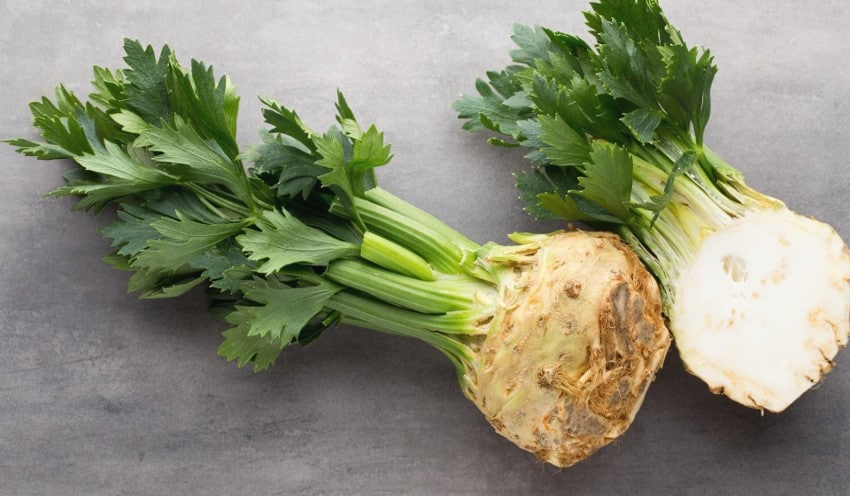
Celery : Le céleri est une plants vegetable garden biennial (family of Apiaceae - Botanical name: Apium graveolens L.), dont on utilise les rods, ribs, leaves, the root and seeds. Elle est issue, par sélection, de l’ache odorante, and his seeds sont un véritable aromatics. On distingue deux types de céleri : le celery branch, dont on a développé les pétioles, et le céleri-rave (encore appelé celery root ou céleri boule ou encore céléri pomme), dont on a hypertrophié la racine.
Le terme « céleri » est à l’origine un mot emprunté à un dialecte italien, le lombard, seleri qui dériverait du latin selinon, mot désignant à l’origine la plante en grec.
Cette espèce est désignée de nombreux noms communs : céleri, aussi écrit cèleri, ache des marais, ache odorante, ache puante, persil des marais, persil odorant, céleri d’Italie… auxquels il faut ajouter les noms des variétés ci-dessous.
de : Staudensellerie, Stielsellerie, en : celery, es : apio, apio bastardo.
Dans l’Antiquité, la plante est connue sous le nom de « Selenon », ou « plante de la lune ». À rapprocher de Séléné, la déesse grecque de la Lune.
On distingue quatre grandes variétés dans cette espèce, dont trois sont couramment cultivées :
– Apium graveolens var. graveolens : l’ache des marais ;
– Apium graveolens var. dulce : le céleri-branche ou céleri à côtes ;
– Apium graveolens var. rapaceum, le céleri-rave ou céleri-navet ;
– Apium graveolens var. secalinum : le céleri à couper, ou céleri chinois.
Variétés cultivées[modifier | modifier le code]
Actuellement près de 120 variétés de céleri à côtes et de 59 variétés de céleri-rave sont inscrites au catalogue européen des espèces et variétés.
Parmi les 8 variétés de céleri à côtes inscrites au catalogue français on peut citer : « À couper », « Albedo », « D’Elne », « Géant doré amélioré », …
Le celery salt is a mixed de seeds ground as well as fine salt qui sert surtout à aromatiser le tomato juice, cocktail bloody mary, crèmes de légume and Sauces de s. Il est également employé dans les régimes sans sel.
– Céleri-branche : Le céleri-branche est un type de celeri à feuillage vert ou doré et à côtes blanches et fleshy, brillantes et cassantes quand elles sont bien fresh, avec un pied assez lourd, pouvant dépasser 1 kilo. Très digest, little caloric, le céleri-branche est riche en calcium, Potassium, sodium chloride et fibers. Le céleri-branche se conserve frais plusieurs jours si on laisse tremper la base des rods inwater Cold et salt (pas au fridge, car il se flétrit). On consomme les ribs flood (to the salt-crunch or in salads) or cooked. THE leaves, fresh ou dried, aromatize the salads, soups and soupes (il est indispensable dans la soupe marocaine harira), Sauces, short bouillons et fonds de braising. On trouve du céleri-branche en conserve (cœurs de céleri et sections for garnish in natural), et il se prête bien à la freezing. Le céleri à cut, whose leaves à ribs Finnish et creuses sont Soft caramels, est utilisé comme aromatics.
– Céleri-rave : Le céleri-rave est cultivé pour sa the root à chair more or less blanche, qui, à maturity, pèse de 800 g à 2 kg. Vendu sans ses leaves, le céleri-rave doit former une boule heavy et farm. It is consumes raw ou cooked (surtout dans les pot au feu) or in cream. On le trouve en conserve, grated et flavored au vinaigre ou mayonnaise.
Préparé en remoulade, il fait partie des rawness served in appetizers.
Comme le céleri-branche, le céleri-rave est très digest, little caloric, too rich en mineral salts (calcium, Potassium, sodium chloride, phosphorus), mais plus riche en fibers and vitamin B9.